If you run a factory, warehouse, showroom, or office in Chhatrapati Sambhajinagar or anywhere else in Maharashtra, you have probably looked at your electricity bill and wondered whether solar actually pays off, or whether it is just a good pitch from a salesperson. It is a fair question. A commercial solar system is a real capital decision, not an impulse purchase, and it deserves a clear-eyed answer rather than a marketing slogan.
The short answer: for most businesses with a stable daytime electricity load and a roof or land area exposed to good sunlight, commercial solar is worth it — but "worth it" depends heavily on your tariff category, how much power you consume during daylight hours, your available space, and how the system is financed. Let's walk through the numbers and the reasoning so you can judge it for your own business rather than take anyone's word for it.
Why Commercial Electricity Bills Make Solar Attractive
Industrial and commercial power tariffs in Maharashtra are significantly higher than residential rates. High-tension (HT) industrial consumers typically pay somewhere in the range of ₹8 to ₹10 per unit, depending on their connection category and time-of-use slabs. That gap between what you pay MSEDCL and what it actually costs to generate a unit of solar power on your own roof is where the financial case for commercial solar comes from.
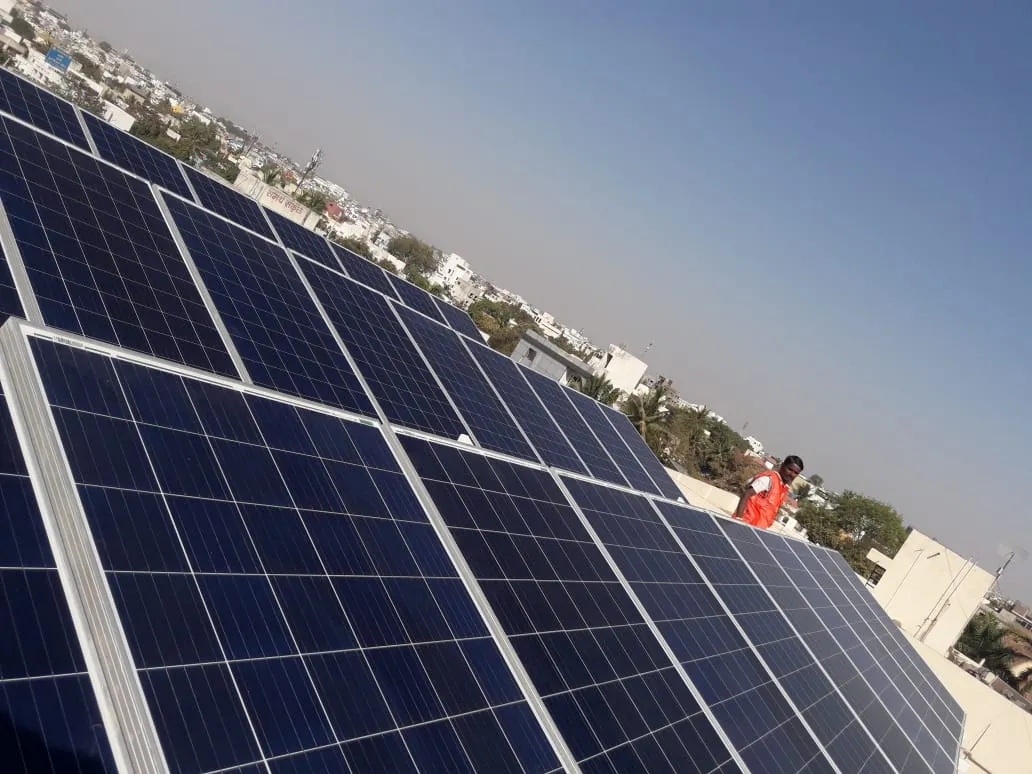
Unlike a home, most commercial and industrial operations consume the bulk of their electricity during the day — machinery, HVAC, lighting, refrigeration, and equipment all run during business hours. That daytime consumption pattern happens to line up almost exactly with when solar panels generate the most power. This is a big part of why commercial solar economics tend to be stronger than residential solar economics: you are consuming most of what you generate, in real time, instead of exporting a large share of it back to the grid at a lower rate.
The Real Cost Factors Businesses Need to Weigh
1. Upfront Investment vs. Long-Term Savings
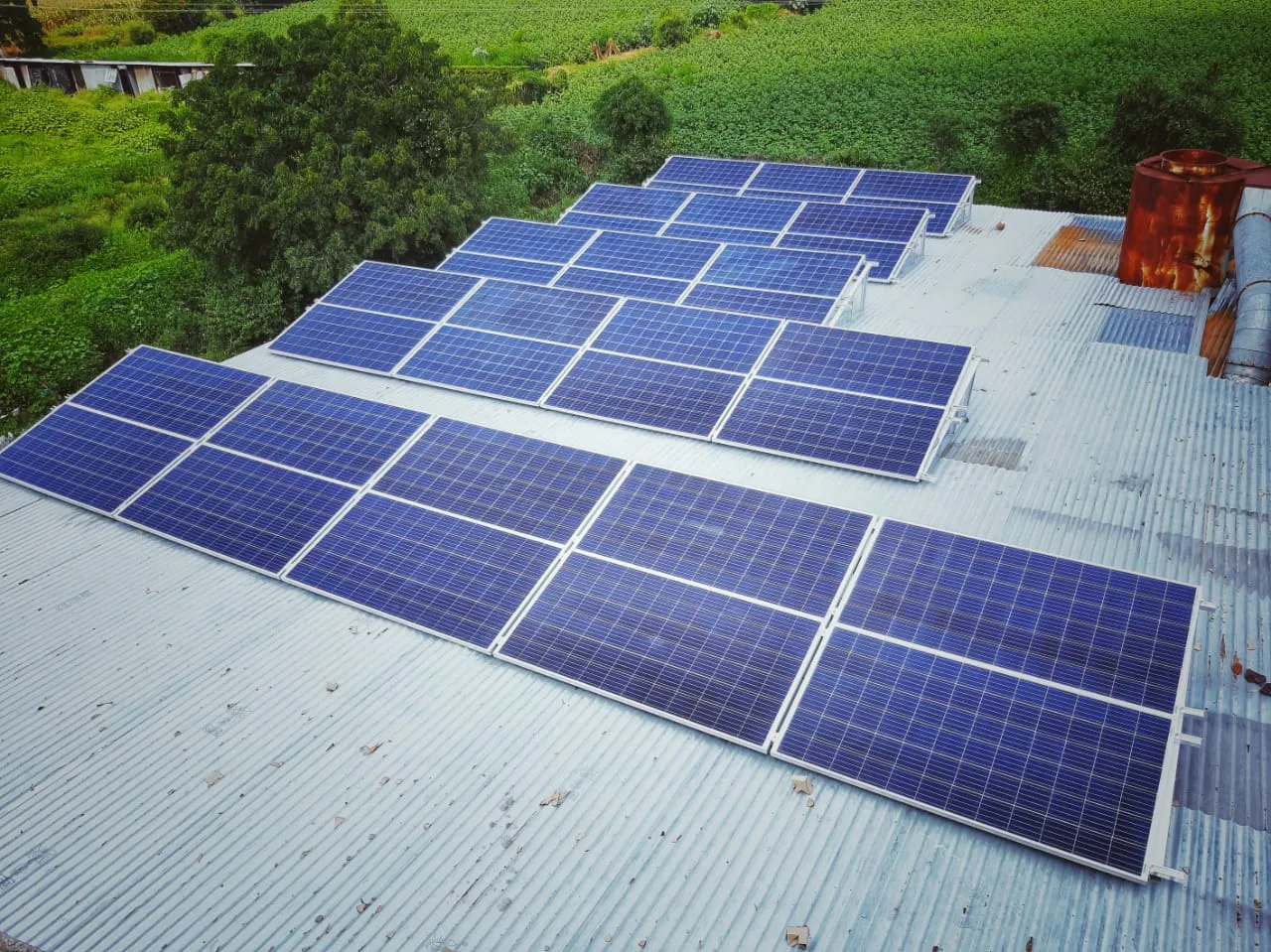
A rooftop or ground-mounted commercial system requires a meaningful upfront cost — panels, inverters, mounting structure, wiring, and installation labour. But once commissioned, a solar system produces power at a near-zero marginal cost for the next two to three decades, with the only ongoing expenses being periodic cleaning, minor maintenance, and eventual inverter replacement.
2. Accelerated Depreciation
This is one of the most underused advantages for Indian businesses. Commercial and industrial solar installations qualify for accelerated depreciation under Indian income tax rules, allowing a business to write off a large portion of the asset's value — commonly around 40% in the first year — against taxable income. For a profitable company, this tax shield meaningfully lowers the effective cost of the system and pulls the break-even point closer, sometimes by a year or more compared to a straight cash-flow calculation.
3. Net Metering and Export Rules
Maharashtra's electricity regulator has expanded net metering for commercial and industrial consumers, with system sizing generally allowed up to 5 MW or your sanctioned load, whichever is lower. For smaller commercial systems, surplus power exported to the grid can offset your bill through net metering. For larger installations — typically above 100 kW — excess generation shifts to the Green Open Access framework, where exported units are compensated at the Average Power Purchase Cost rather than the retail tariff, which is usually a much lower rate. In practice, this means the strongest returns come from sizing your system around your own daytime consumption rather than trying to maximise export.
Looking for Custom Commercial Solutions?
Explore our commercial rooftop solar solutions tailored specifically for offices, retail hubs, and commercial complexes across Maharashtra.
4. Electricity Duty Exemption
Maharashtra also offers an electricity duty exemption on power generated from solar systems, which adds another layer of savings on top of the reduced per-unit cost, though the exact treatment can vary by consumer category and connection type. It is worth confirming current applicability with your DISCOM or a qualified solar consultant before finalising your numbers.
5. Space and Structural Suitability
Not every roof is solar-ready. Shading from neighbouring buildings, roof age, load-bearing capacity, and available unshaded area all affect how much capacity you can realistically install — and therefore how much of your bill you can actually offset. A proper site survey, not a generic online calculator, is the only reliable way to know your true potential.
What Is the Lifespan of a Commercial Solar Panel?
This is one of the most common questions business owners ask before committing to an investment of this size, and it deserves a straightforward answer.
Most Tier 1 commercial solar panels come with a performance warranty of 25 to 30 years, guaranteeing a minimum output level — often around 80% of original capacity — by the end of that period. In practice, panels rarely stop working at year 25. Industry data, including studies referenced by the National Renewable Energy Laboratory, shows that modern crystalline silicon panels degrade at an average of roughly 0.5% per year, meaning a well-installed system can still be producing close to 85-88% of its original output at the 25-year mark, and many panels continue generating usable power well beyond that.
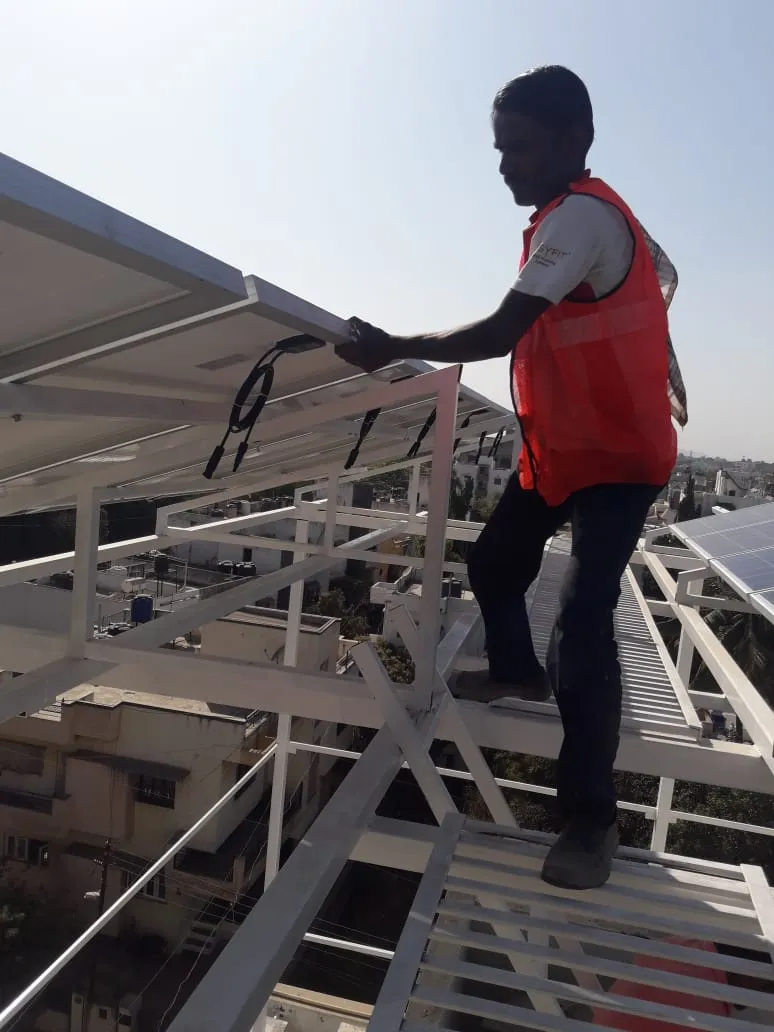
A few practical points matter more than the headline number:
- Degradation is gradual, not sudden. Panels do not "expire" — they slowly produce a little less each year.
- Inverters usually need replacement before panels do. Most inverters last 10 to 15 years, so budget for at least one replacement over a 25-year system life.
- Panel quality varies. Tier 1, ALMM-listed panels from established manufacturers — such as the Waaree panels we distribute across Maharashtra — tend to degrade more slowly and come with more reliable warranty backing than unbranded or lesser-known imports.
- Maintenance extends useful life. Dust and pollution buildup — a real factor in industrial zones — can temporarily reduce output if panels aren't cleaned periodically. This is soiling, not permanent degradation, but it compounds if ignored.
In short, a commercial solar investment is designed to outlast its financing period by a wide margin, which is exactly what makes the long-term economics work in a business's favour.
Solar Rooftop for Commercial Buildings: What to Actually Expect
A commercial solar rooftop project is a more involved process than a residential one, mainly because commercial roofs are larger, load calculations are more technical, and approvals go through an industrial or commercial connection category rather than a simplified residential portal.
The general sequence looks like this:
- Site assessment — evaluating roof area, orientation, shading, and structural load capacity.
- Load and consumption analysis — reviewing your electricity bills to size the system against your actual daytime usage, not just your roof space.
- System design and quotation — selecting panel capacity, inverter type, and mounting structure suited to your building.
- Approvals and net metering application — submitted through your DISCOM (MSEDCL, in most parts of Maharashtra) for your commercial or industrial connection category.
- Installation and commissioning — typically completed within a few weeks for a standard rooftop system, depending on size.
- Net meter installation and grid sync — the final step before the system starts offsetting your bill.
Timelines for net metering approval on industrial and commercial connections can take longer than residential applications, so it helps to factor this into your project planning rather than assuming installation and activation happen on the same day.
Solar Panels for Factories: A Slightly Different Calculation
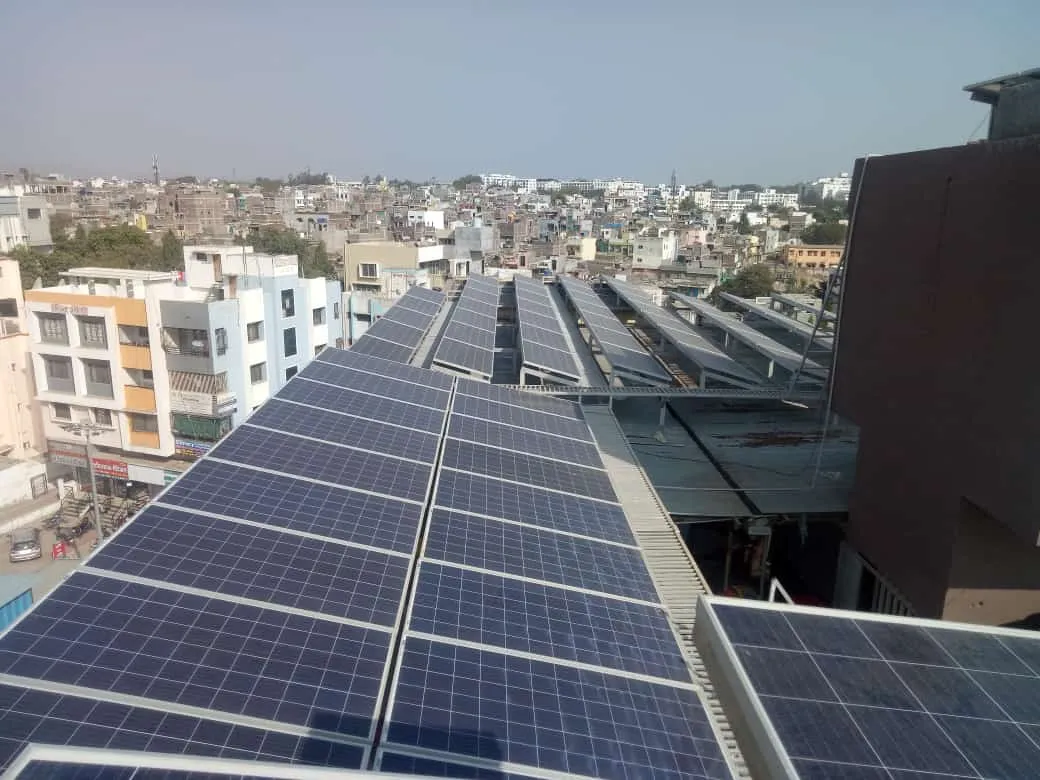
Factories and manufacturing units tend to have higher, steadier daytime loads than offices or retail spaces, which generally makes the solar case even stronger. A factory running two shifts with heavy daytime machinery use will typically self-consume a much higher share of the solar power it generates, reducing reliance on the grid during the most expensive tariff hours.
That said, factories also have specific considerations: available roof space is sometimes shared with skylights, HVAC units, or exhaust systems; structural load capacity needs verification, especially on older industrial sheds; and larger systems above 100 kW fall under the Green Open Access framework rather than simple net metering, which changes how export credits are calculated. Discover more about solar systems designed for factory rooftops to see how industrial engineering differs.
So, Are Commercial Solar Panels Worth It in India?
Zooming out to the national picture, the answer largely mirrors what we've already covered for Maharashtra: high commercial and industrial tariffs across most Indian states, combined with accelerated depreciation benefits, structured net metering policies, and a 25-30 year panel lifespan, make commercial solar a financially sound decision for the majority of businesses with adequate roof space and daytime consumption. The specifics — tariff rates, net metering caps, and export compensation — vary by state and DISCOM, so what applies in Maharashtra won't be identical to Gujarat or Tamil Nadu, but the underlying economic logic holds across most of the country.
The businesses that see the weakest returns are typically those with very low daytime consumption, heavily shaded roofs, or extremely short planning horizons where they don't intend to occupy or own the property long enough to recover the investment.
Common Mistakes Businesses Make Before Going Solar
- Sizing the system to the roof instead of the load. A bigger system isn't automatically better if you can't consume or profitably export the extra power.
- Skipping a proper structural assessment. Older roofs may need reinforcement before mounting panels.
- Choosing panels purely on upfront price. Cheaper, non-ALMM-listed panels can degrade faster and complicate warranty claims.
- Not accounting for accelerated depreciation in the payback calculation. This tax benefit is often left out of DIY estimates, making the payback period look longer than it really is.
- Ignoring net metering approval timelines. Commissioning delays are usually administrative, not technical — plan for it.
Making the Decision for Your Business
There isn't a single number that tells every business whether solar is worth it — it depends on your tariff category, your daytime load profile, your roof or land availability, and how long you plan to operate from the same premises. What's consistent across most commercial and industrial cases in Maharashtra is that the combination of high grid tariffs, tax depreciation benefits, and a multi-decade panel lifespan tends to produce a payback period that is well within the useful life of the system — often leaving 15 or more years of largely free power generation after the investment is recovered.
The most reliable way to know your actual numbers is a proper site survey and load analysis specific to your business, rather than a generic percentage found online.
Frequently Asked Questions
1. How long does it take for a commercial solar system to pay for itself?
Payback periods vary by tariff category, system size, and financing, but many commercial systems in Maharashtra recover their cost within a reasonable number of years when accelerated depreciation and net metering savings are factored in together. A site-specific calculation is the only accurate way to know your figure.
2. What is the lifespan of a commercial solar panel?
Most Tier 1 commercial panels carry a 25 to 30-year performance warranty and continue generating meaningful power beyond that, with typical degradation of around 0.5% per year under normal conditions.
3. Do commercial solar panels work well during Maharashtra's monsoon season?
Yes, though output drops on heavily overcast or rainy days since generation depends on sunlight availability. Systems are typically sized with this seasonal variation in mind, and rain also helps naturally clean the panels.
4. Is net metering available for commercial and industrial connections in Maharashtra?
Yes. Net metering is available up to 5 MW or your sanctioned load, whichever is lower, for eligible commercial and industrial consumers, subject to your DISCOM's application and approval process.
5. How much roof space does a factory or commercial building need for solar?
As a rough guide, a 1 kW system typically needs around 80-100 square feet of unshaded roof area, though this varies by panel efficiency and layout. An on-site survey gives an accurate figure for your building.
6. Can a business lease solar panels instead of buying them?
Some businesses use third-party financing or lease structures instead of an outright purchase, which lowers upfront cost but changes who claims the depreciation benefit. It's worth comparing both structures against your cash flow before deciding.
7. Do commercial solar panels need regular maintenance?
Periodic cleaning to remove dust and pollution buildup, along with occasional inverter checks, is the main maintenance requirement. Panels themselves have no moving parts and require minimal upkeep beyond that.
Ready to See the Numbers for Your Business?
If you're weighing whether commercial solar makes sense for your business in Chhatrapati Sambhajinagar or elsewhere in Maharashtra, the most useful next step is an actual site assessment rather than a generic estimate. CRPL Solar, an authorised Waaree distributor in Maharashtra, can walk your roof or facility, review your electricity consumption pattern, and put together numbers specific to your business.
Book a Site Assessment →